June 3, 2026
How the Prize Book and Livestock Shows Work
New to exhibiting at the fair? Here's a plain-language guide to how the Prize Book and Livestock Shows are organized — and how to enter your own pie, photo, quilt, or heifer.
A county fair is not just something you watch — it’s something you enter. Behind the midway lights and the smell of fries, the Beachburg Fair is, at its heart, a competition. Hundreds of pies, photographs, quilts, vegetables, flowers, calves, and lambs are judged against one another every July, and the ribbons that come out of it have been a point of pride in this community since 1857.
If you’ve never entered before, the two documents that run the whole thing — the Prize Book and the Livestock Shows listing — can look a little daunting. They don’t need to be. Here’s how they actually work.
The Prize Book
The Prize Book covers everything that isn’t a live animal: baking, preserves, arts and handicrafts, fibre arts, flowers, vegetables, photography, and the Junior Fair classes for kids. It’s organized in three simple layers:
- Categories — the broad groupings, like Culinary, Photography, or Fibre Arts. Each has its own section and its own set of general rules.
- Classes — numbered sections within a category. For example, Class 45 is “Arts,” Class 46 is “Handicrafts.” A class usually shares one prize structure and one set of judging criteria.
- Entries — the individual numbered items you can actually submit. Under a baking class you might find “Banana bread,” “Butter tarts (6),” and “Chocolate chip cookies (6),” each on its own line.
When you read an entry, you’re reading the exact thing the judge expects to see on the table. Most amateur classes pay $10 / $8 / $6 for first, second, and third, and the judging breakdown is printed right alongside — for handicrafts, for instance, workmanship counts for 50% of the score.
The Prize Book is open to amateurs and hobbyists — you don’t need to be a professional, and first-timers are genuinely welcome. You can browse and search the whole thing online, then bring your entries to the Exhibit Hall for judging on the Friday of the fair.
The Livestock Shows
The Livestock Shows listing works a little differently, because live animals come with more rules. Instead of categories, it’s organized by show: Dairy Cattle, Beef Cattle, Sheep, Miniature Horse, and the 4-H Achievement Day.
Each show has its own page of details — the date and time, the location (usually the Show Dome), the judge, and the full list of classes. Classes here are grouped by age and type of animal, like “Spring Heifer (born March–May 2026)” or “PeeWee Showmanship” for the youngest handlers.
A few things set the livestock side apart:
- Bigger prize money. A placing in an open dairy class can pay $65 for first, scaling down through the placings.
- More requirements. Exhibitors need current livestock ID tags, may need to show proof of liability insurance and pedigrees, and a small membership fee applies if you’re not already a member. A 15% administration fee is deducted from larger prize totals.
- An earlier deadline. Livestock entries must be in by July 5, 2026.
How to enter — both run through AssistExpo
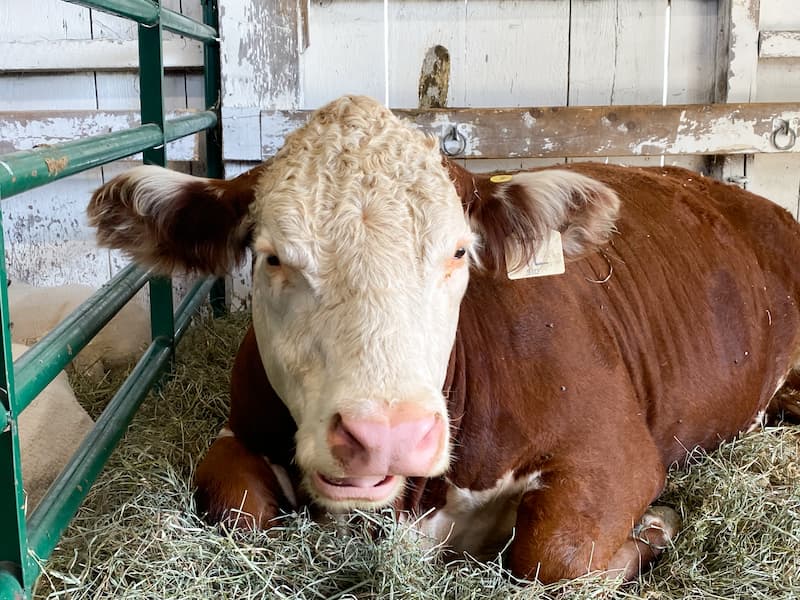
Whether you’re entering a loaf of bread or a Hereford heifer, registration happens online through AssistExpo. You can register at AssistExpo here. Read the exhibitor rules for your category or show first, note the entry deadlines, and submit your entries online before you bring anything to the grounds.
That’s the whole system. Pick a class, follow the rules printed beside it, register through AssistExpo, and show up. Whether you walk away with a ribbon or not, you’ll have helped fill the halls and rings that make the Beachburg Fair what it is.
Have a look at the Prize Book and the Livestock Shows and find your class. We’ll see you in July.